May 26, 2026
What is VIPV, and why does it matter for urban fleets?
Electric vehicles are often described as the clean alternative to combustion. But even an EV carries a dependency: the grid. It needs to be plugged in, charged up, and dispatched from a depot with enough range to complete its route. For many urban fleet applications, that is a manageable constraint. For others, it is the limiting factor: remote locations, markets with unreliable grid access, operations where a depot is not an option, or simply businesses that want to cut their energy costs and infrastructure dependency at the same time. The next step is a vehicle that does not just consume clean energy, but generates it.
Vehicle-Integrated Photovoltaics, or VIPV, is exactly what it sounds like: solar power built into the vehicle itself. Not panels added on top, but photovoltaic cells integrated into the bodywork so that the vehicle’s own surface generates renewable electricity as it operates.
How VIPV works and what it delivers
When sunlight hits the integrated solar cells, it is converted into electricity that feeds directly into the vehicle’s system. That energy can extend the driving range by supplementing the main battery and in some duty cycles, cover the vehicle’s full daily energy demand without any grid charging at all.
For light urban vehicles, VIPV has four concrete implications.
- Extended range without a larger battery.
Rather than carrying more battery weight to cover more distance, a VIPV vehicle generates energy on the move. This matters especially in urban environments with high stop-start frequency and regular outdoor dwell time, precisely the conditions where solar yield accumulates steadily across a working day. - Reduced infrastructure dependency.
VIPV reduces, and in some cases eliminates, the need for charging stops during operation. In areas where public charging is sparse or depot charging points are limited, this changes the practical range of what is operationally possible. - Lower running costs over time.
Consistent solar input reduces the total energy drawn from the grid. Over a vehicle lifecycle, that compounds into meaningful savings on energy cost per kilometre, and moderates charge cycling in ways that extend battery life. - Greater energy autonomy. A vehicle that generates its own power is less exposed to grid tariff volatility, charging availability, and the carbon intensity of local electricity supply. It operates with a degree of independence that has both environmental and practical value.
Why lightweight is the enabling condition
VIPV does not work equally well on every vehicle. The physics are clear on this point. A heavier vehicle requires more energy to move. More energy demand requires a larger battery. A larger battery adds more weight. At some point, the energy a solar panel can realistically generate becomes insufficient to make a meaningful contribution to a heavy platform’s range.
The only way to make VIPV viable as a primary energy source, rather than a minor supplement, is to design the vehicle to be genuinely lightweight from the start. When the platform is right-sized for its actual use case, the solar yield becomes sufficient to matter. The mathematics of lightweight and solar work together, or they do not work at all.
This is why most attempts to bolt VIPV onto conventional vehicle platforms produce underwhelming results. A standard cargo van or delivery truck carries enough mass that solar yield becomes a rounding error in its energy budget. The cells are there, but they are doing very little. True VIPV performance requires a vehicle conceived around solar from the first design decision, not adapted to accommodate it later.
What VIPV means for sustainability
The operational case for VIPV is strong. But the environmental case is equally compelling, and for organisations with emissions targets or ESG reporting requirements, worth spelling out.
- Renewable energy at the point of use.
A vehicle with VIPV generates clean electricity wherever it operates, with no transmission losses, no grid carbon intensity, and no dependency on the local energy mix. The energy is produced and consumed in the same place. - Energy that requires no extraction.
Sunlight is a genuinely renewable input with no mining, no refining, and no supply chain vulnerability. Unlike battery energy that traces back to grid generation, solar yield on a VIPV vehicle is clean from source to wheel. - Lower lifecycle emissions.
Reducing grid charging reduces the carbon footprint of every kilometre driven. Over a vehicle lifecycle, consistent solar input can significantly lower the total emissions associated with fleet operation, including the indirect emissions increasingly scrutinised under Scope 3 reporting. - Reduced embodied carbon.
A lightweight platform requires less material to manufacture, carries a smaller battery with a lower production footprint, and generates less waste at end of life. The sustainability case for VIPV does not begin when the vehicle starts moving. It begins in the design process.
EVIG: VIPV by design, not by addition
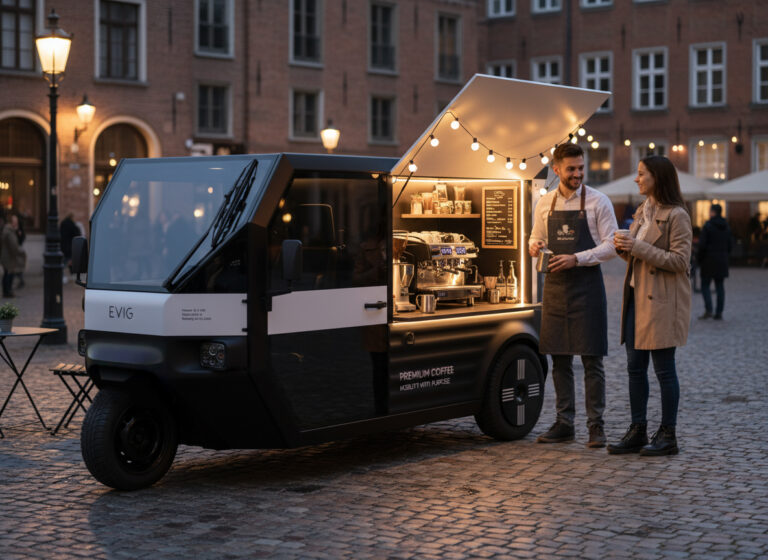
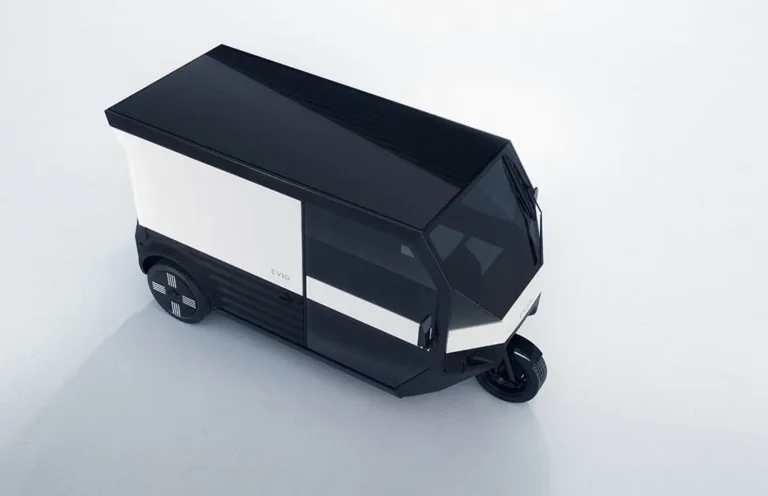
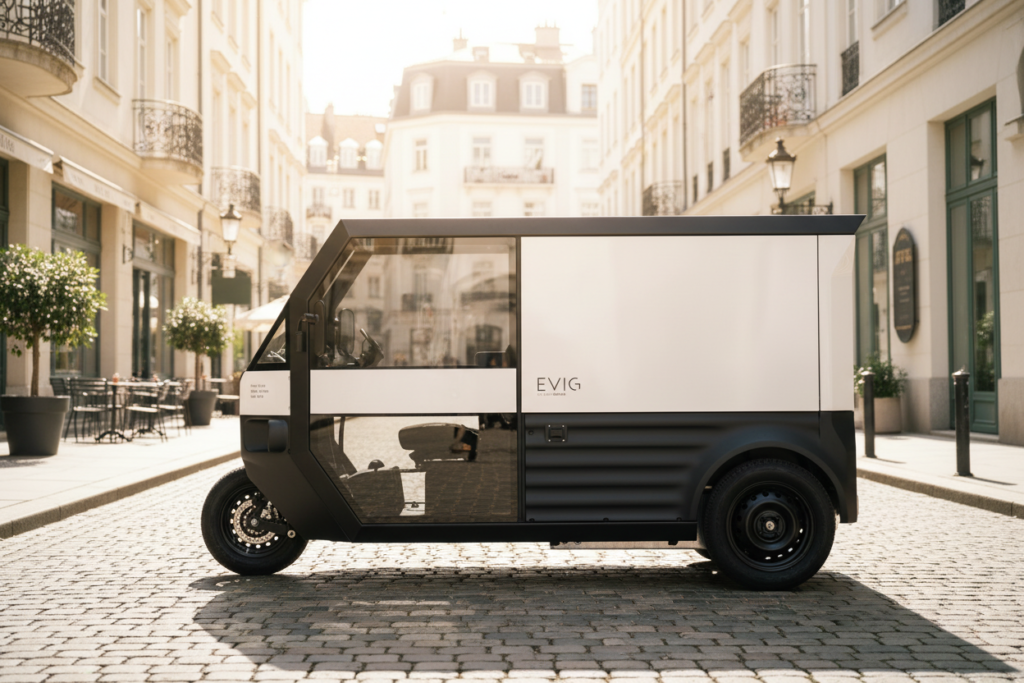
EVIG by Clean Motion was engineered with this constraint at its core. At under 500 kilograms, it is built around the principle that right-sizing a vehicle for its real operating environment, urban and peri-urban delivery, municipal services, and specialist transport, is what makes solar-powered operation a daily reality rather than a marginal gain.
The photovoltaic cells are integrated as a structural and functional element of the vehicle, not an accessory. The drivetrain, battery sizing, and energy management system are all calibrated around a platform where solar contributes to daily range from day one. This is not a conventional EV with solar added. It is a vehicle designed from the ground up so that solar works.
The practical result is a vehicle where solar yield is a real operational input. Depending on route, season, and outdoor dwell time, EVIG’s solar integration can offset a significant share of daily energy demand, reduce or eliminate mid-day charging, and in the right conditions, sustain full-day operation without any grid input at all.
You may also like